
High performance, on human terms. Introducing Intentional Growth Issue 01
I have a confession to make.
For most of my life, I've told myself I'm not academic. Not the kind of person who does well in formal education. The kind of person who learns by doing, by failing, by getting back up - but not by writing essays for professors to mark.
So signing up for an MSc in Performance Psychology at Bangor University at 50 was, to put it mildly, a stretch goal.
Not just because it had been a long time since I'd studied academically. But because I was walking straight into a story I'd been telling myself for decades. The one that said: this isn't for you.

Bangor University, where the science behind Issue 01 came to life and where I discovered that the story I'd been telling myself about not being academic was exactly that. A story
What happened when I reframed the goal.
Here's what I've learnt (from the research and from living it) about goals that feel bigger than we are: your perception of the goal has everything to do with how you're going to perform towards it.
Not the goal itself. Your relationship with it.
I made a deliberate choice before I started the course. Rather than framing it as "I need to prove I'm academic" (which would have set me up for threat appraisal from day one, braced, scanning for the moment I'd be found out) I reframed it entirely. My goal became to have a go. To learn. To not see feedback from the Professors as validation of not being academic but instead as an opportunity to grow.
By shrinking the demand of the goal with a reframe, suddenly my perception of the goal became that it was achievable. And that meant I was able to completely embrace the opportunity. For a non-academic, non-science individual, I was completely fascinated by the first module. The science felt alive. It connected directly to everything I'd been observing in my coaching work for years - in my clients, in myself, in the moments that shape how we perform when it counts.
“I made a deliberate choice before I started the course. Rather than framing it as “I need to prove I’m academic” (which would have set me up for threat appraisal from day one, braced, scanning for the moment I’d be found out) I reframed it entirely. My goal became to have a go”
And I got a first!
I'm sharing that not to boast, but because it's evidence of something important: when your mind reads a goal as challenge rather than threat - when your perceived resources feel equal to or greater than the demands - performance shifts. Measurably. In ways the science has been documenting for years.
That experience is what led me to create Intentional Growth.
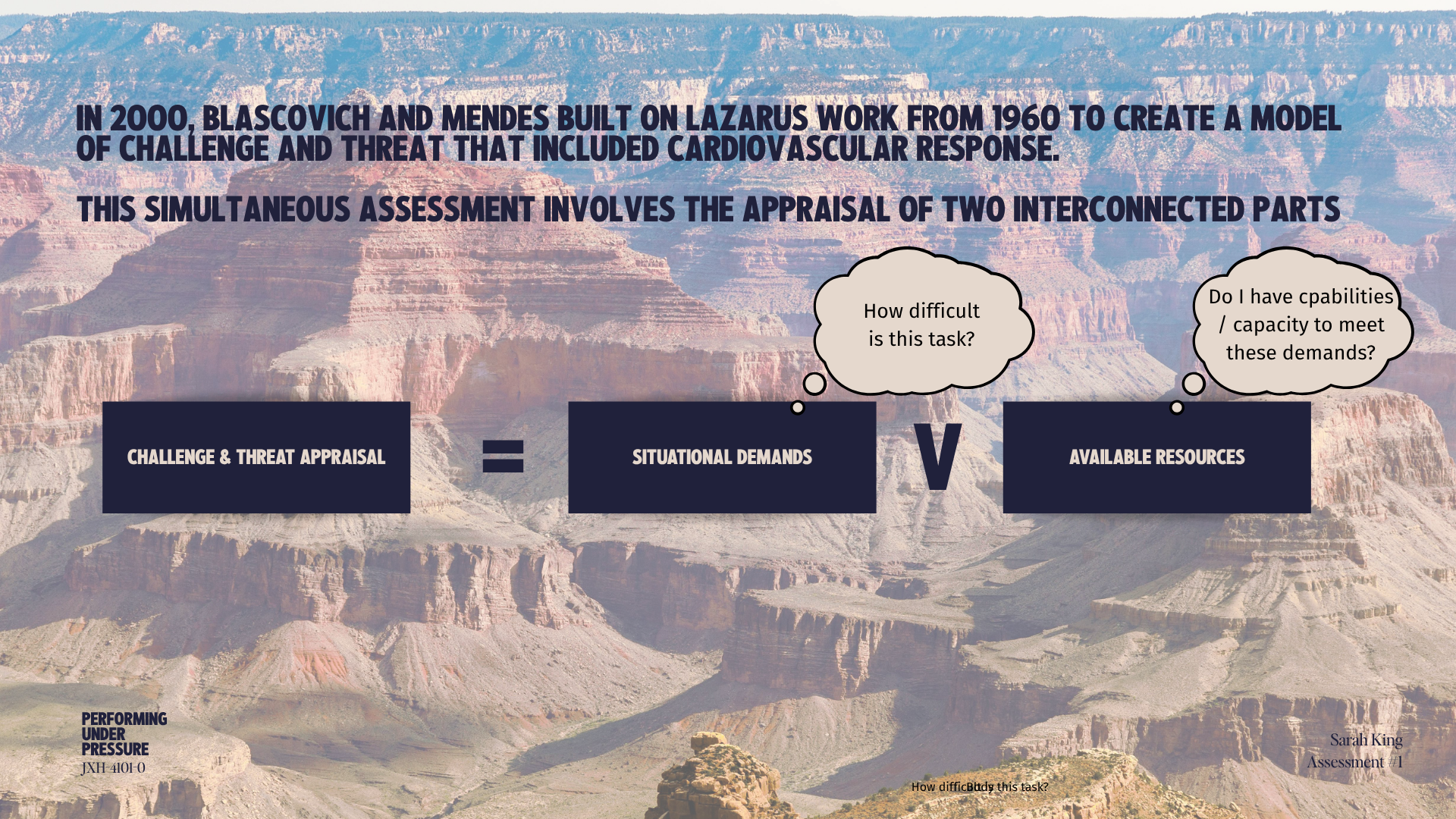
Extract from my first assignment
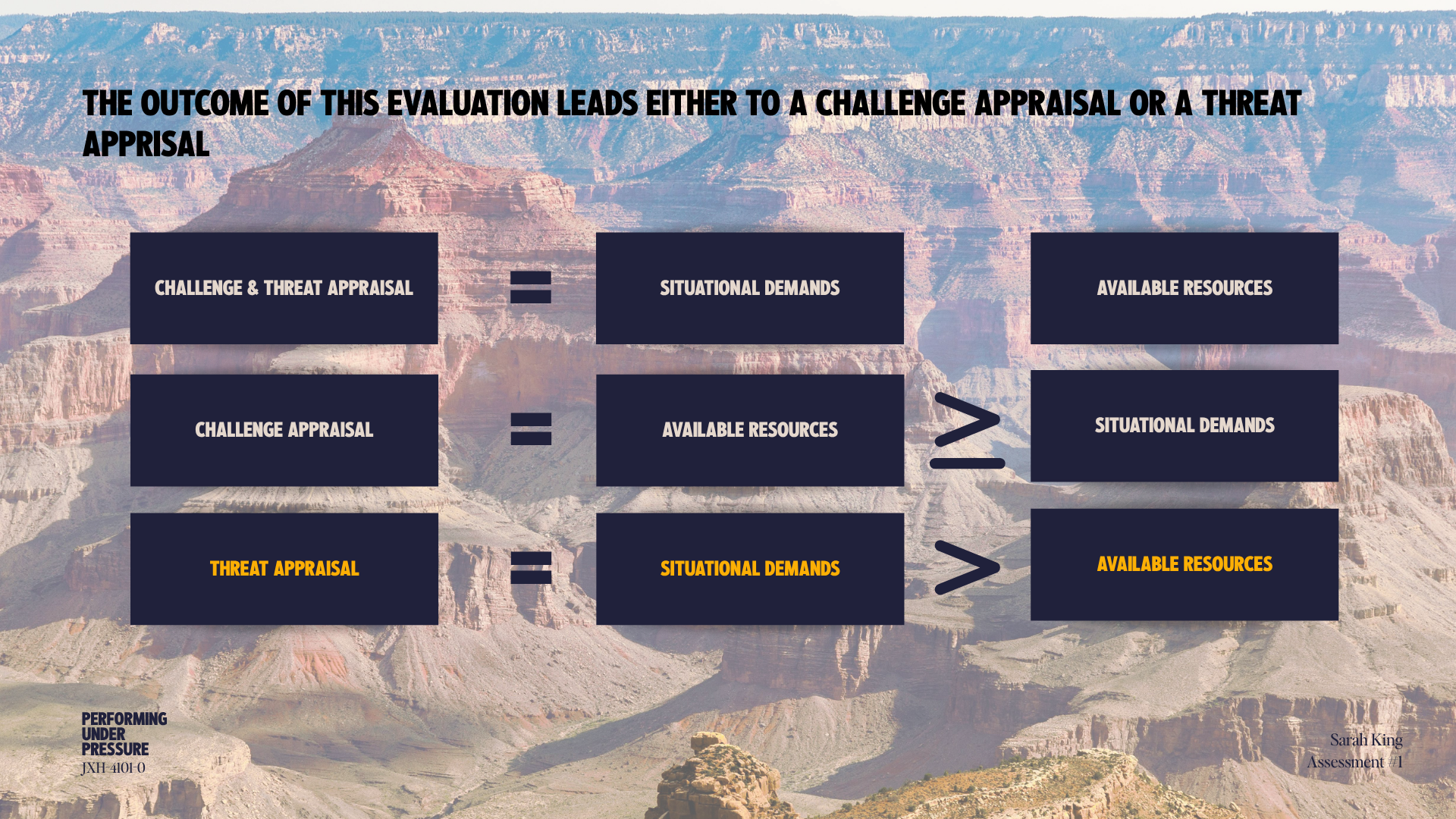
Extract from my first assignment
What Intentional Growth is.
Intentional Growth is a free quarterly epublication from mortl. Each issue takes one concept from the science of performance psychology and makes it genuinely useful - grounded in research, connected to real life, with something practical to do with it.
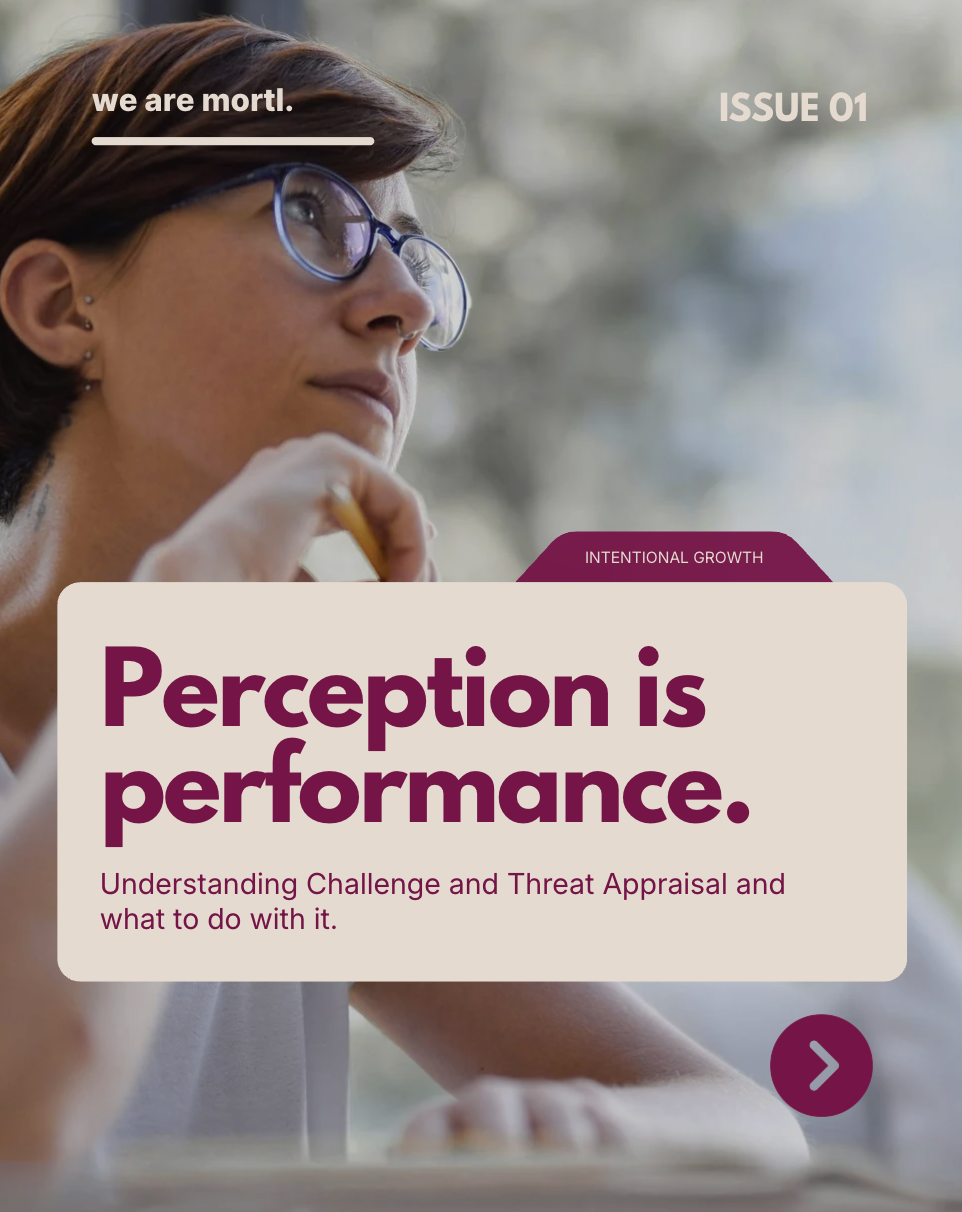
Issue 01 is on Challenge and Threat Appraisal. A psychophysiological model developed by Blascovich and Mendes which explains what actually happens in your mind and body when you face a goal that matters, and why the same goal can feel completely different depending on the moment you're in.
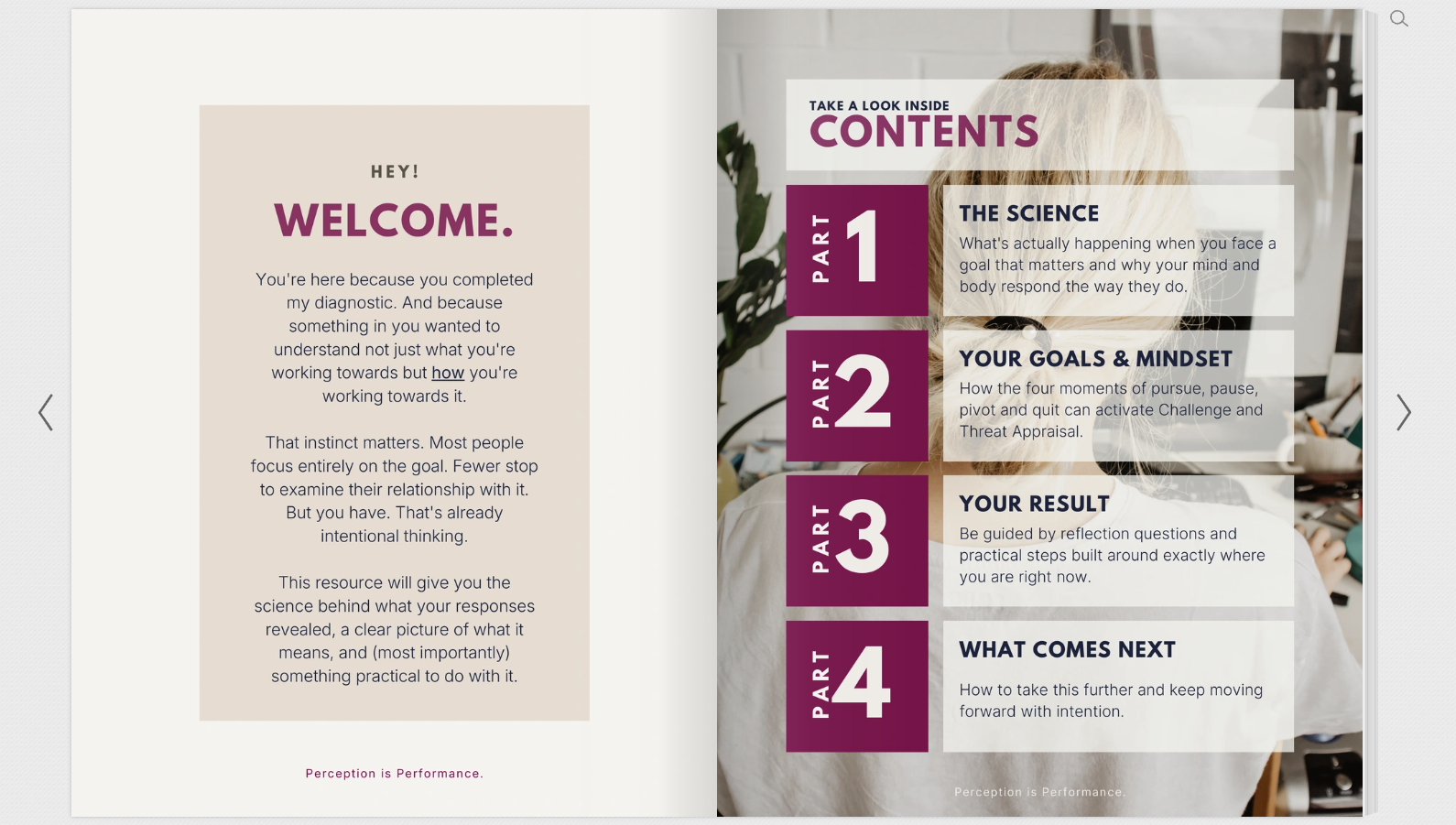
This first publication covers four things: the science behind what's happening when you face a motivated performance goal; how the four moments of pursue, pause, pivot and quit each activate the appraisal response in different ways; a self-report diagnostic that shows you which of four states you're currently in (Braced, Guarded, Engaged or Ignited); and practical, specific steps built around exactly where you are right now.
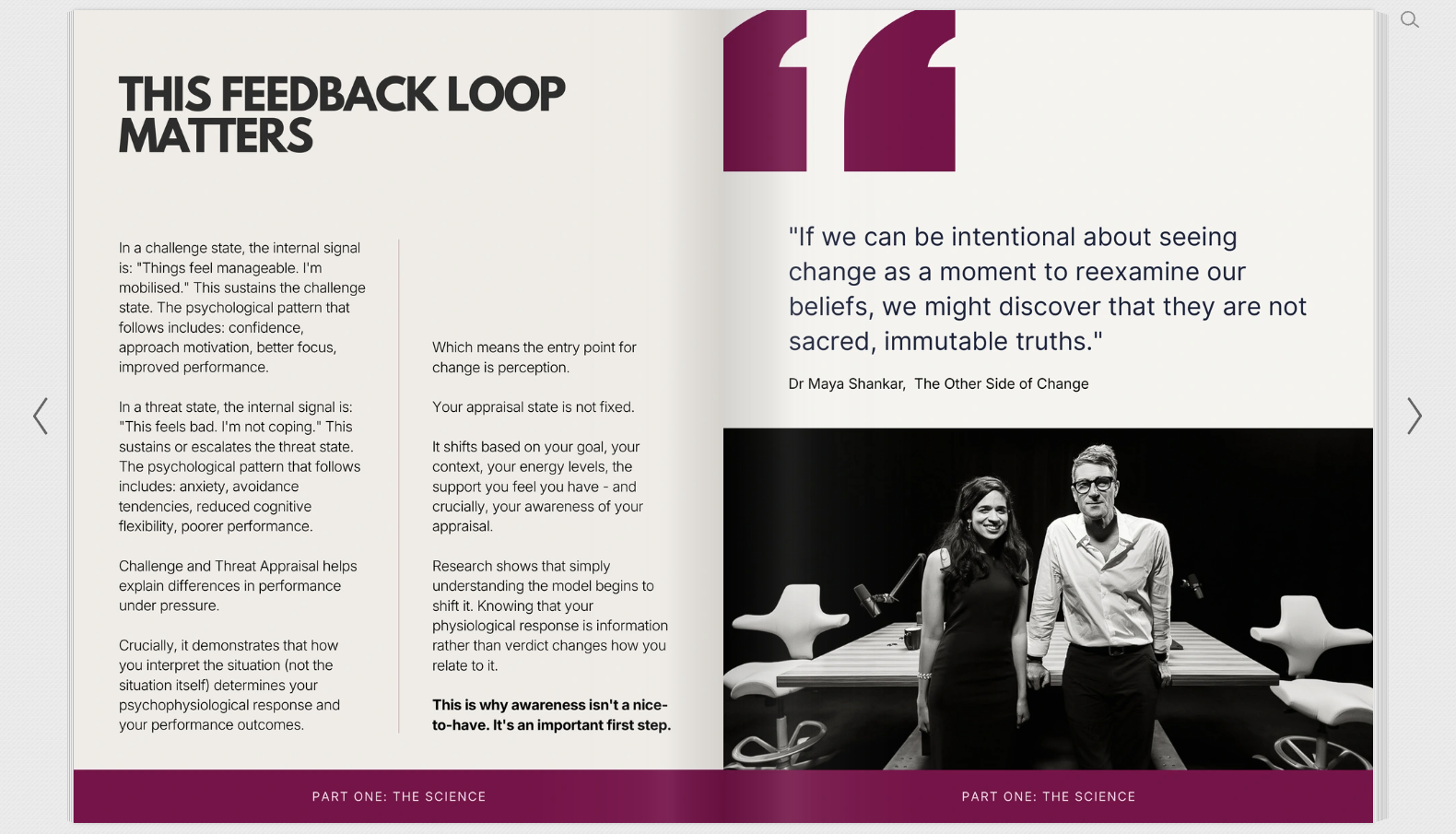
“Understanding your relationship with a goal isn’t a soft, optional extra. It’s the entry point for everything that follows. How you interpret the moment you’re in determines your physiological response. And your physiological response shapes your thinking, your behaviour, and your performance.”
Who it's for
It's for anyone working towards something that genuinely matters to them. A goal that has real significance. One where the outcome isn't guaranteed and where achieving - or not achieving - it will mean something changes.
It doesn't matter whether you're in full pursuit and want to optimise your performance, or whether you're in a harder moment - uncertain, depleted, braced for something to go wrong. The publication meets you where you are. That's the point.
What I found in the first module of my MSc and what I wanted to distil into something people could actually use is that understanding your relationship with a goal isn’t a soft, optional extra. It's the entry point for everything that follows. How you interpret the moment you're in determines your physiological response. And your physiological response shapes your thinking, your behaviour, and your performance.
That feeling you have - the pressure, the resistance, the quiet anxiety, the flicker of excitement - isn't the problem.
It's the signal.
Why I'm publishing this quarterly.
This is the mortl advantage: the realisation that being human (understood properly, worked with intelligently) is the highest-performance state available to you. Not a consolation prize for not being superhuman. The actual goal.
And understanding yourself isn't a one-time event. It requires ongoing input. New science, brought to life. Real application to the actual moments you're navigating - the full, messy, human ones.
Each issue of Intentional Growth will do that. Different topic, same commitment: the science, what it means for your goals, and something practical to do with it.
Issue 01 is free and it’s available now.
Read Intentional Growth Issue 01 here. And if you want to go deeper before you read it, the free anonymous Perception is Performance diagnostic takes five minutes and brings the whole thing to life for a goal you’re working towards right now.